Accessing Support
For many people with premenstrual disorders, the hardest part isn’t just the symptoms; it’s finding a doctor who actually understands what’s going on.
Many people go to a doctor hoping for help, but leave feeling confused or brushed off. Some are told it’s “just bad PMS” or that their hormones are “out of balance.” Research shows that this happens often. Not because patients are wrong, but because many healthcare providers don’t get enough training on recognizing and treating premenstrual disorders.
One reason is that PMDD has only been officially recognized in recent years. Many doctors finished their training before PMDD was taught in medical school. New studies still show that many providers don’t learn enough about how to diagnose or treat PMDD, which leaves patients stuck trying to explain their own condition.
A large research study looked at the experiences of thousands of people who asked doctors for help with severe premenstrual symptoms. The study found that some doctors knew more about PMDD than others, but knowledge was uneven across the healthcare system.
Gynecologists and psychiatrists were more likely to understand PMDD than other providers.
Doctors who understood PMDD were more likely to ask patients to track their symptoms every day for at least two months. This is one of the best ways to diagnose PMDD.
Therapists were often rated highest for listening and caring, even if they weren’t the ones prescribing medicine. This shows how important it is for patients to feel heard.
Choosing the Right Provider
The ideal provider is someone who is trained and experienced in treating premenstrual disorders. However, providers with this specific training can be hard to find. Because of this, it’s important to stay open to working with a provider who may not be an expert yet, but is willing to listen, learn, and help.
Which provider you choose may depend on many things, such as:
How severe your symptoms are
What treatments you’ve already tried
Where you are in your health journey
What providers are available in your healthcare system
Your personal preferences and treatment goals
For first-line treatments, such as antidepressants (SSRIs) or recommended birth control pills, you usually do not need to see a specialist. These treatments are commonly prescribed by primary care doctors and gynecologists and help many people with PMDD.
If you are interested in talking therapy, such as CBT (Cognitive Behavioral Therapy) or DBT (Dialectical Behavior Therapy), it’s important to see a qualified mental health professional who is trained in those approaches.
For more complex treatments, such as chemical menopause or surgery, care is usually provided by gynecologists, endocrinologists, or psychiatrists, especially those with experience or interest in reproductive mental health.
Providers who are knowledgeable about PMDD are often also familiar with PME (Premenstrual Exacerbation). If you’re unsure which condition you may have, asking a provider about their experience treating PMDD is often the best place to start.
Good care doesn’t always mean finding the “perfect” expert right away. A provider who listens, respects your experience, and is willing to work with you can still make a big difference.
Some Things to Consider
If you’re not sure whether you have PMDD or PME, it may help to see a psychologist or psychiatrist who understands premenstrual disorders. They can help tell the difference between conditions that can look similar and support an accurate diagnosis.
If you also have gynecological symptoms, a gynecologist may be a better fit. Examples of gynecological symptoms include:
Very painful periods
Heavy or irregular bleeding
Pelvic pain
Symptoms linked to conditions like endometriosis, fibroids, or PCOS
In an ideal world, care would be collaborative. This means providers working together so you receive both medical treatment and skills to understand, manage, and cope with your symptoms and how they affect your life.
Unfortunately, this doesn’t always happen. Many people are sent back and forth between providers or services, which can be frustrating and exhausting. If this happens, it’s not your fault; it’s a common problem in healthcare systems.
How to Find a PMDD-Aware Doctor
If you’re looking for a doctor who understands PMDD or PME, here are a few places to start:
Use the IAPMD Provider Directory. This is a growing list of healthcare providers who are familiar with premenstrual disorders.
Ask your GP or primary care doctor for referrals. They may be able to recommend a gynecologist or psychiatrist with experience or interest in PMDD, PME, or women’s mental health.
Ask peers in support groups. Online PMDD support groups can be a great way to find local recommendations from people with similar experiences. Tip: In Facebook groups, use the search bar to look up your city or region.
Search online. Trying phrases like “PMDD doctor near me” or “PMDD provider near me” can help you find options in your area. Be sure to research any provider you find.
Finding the right provider can take time, but these steps can help you get started.
Additional Resources
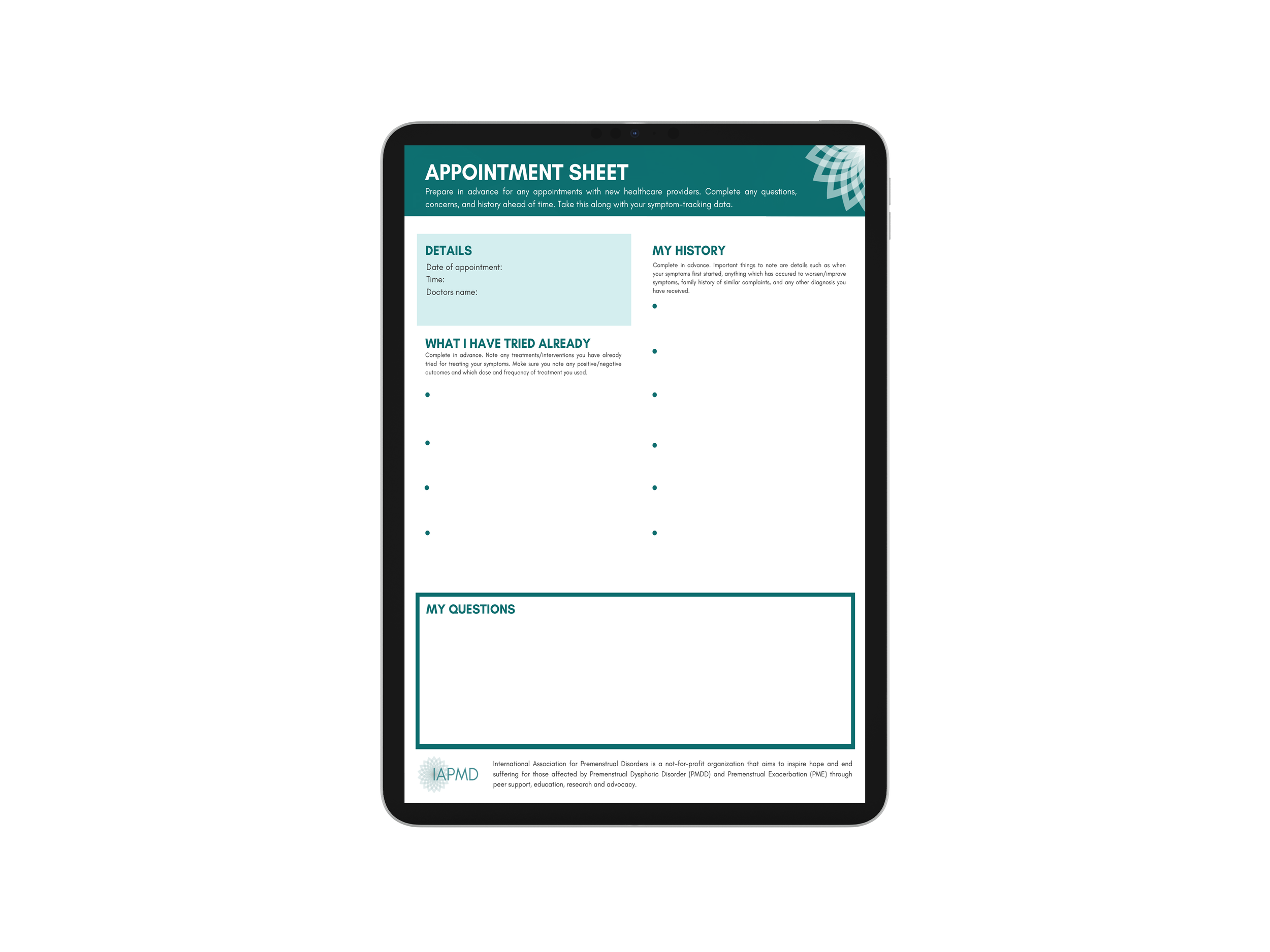
FREE IAPMD Appointment Sheet
$0.00
This free appointment sheet is designed to help you prepare for medical visits related to PMDD and other hormone-related mood disorders. It includes space to track symptoms, medications, questions, cycle patterns, and key concerns so you can communicate clearly and confidently with your healthcare provider.
Created to support self-advocacy and better care, this printable resource makes appointments more organized, productive, and less overwhelming.
Download it for free and bring it to your next visit.
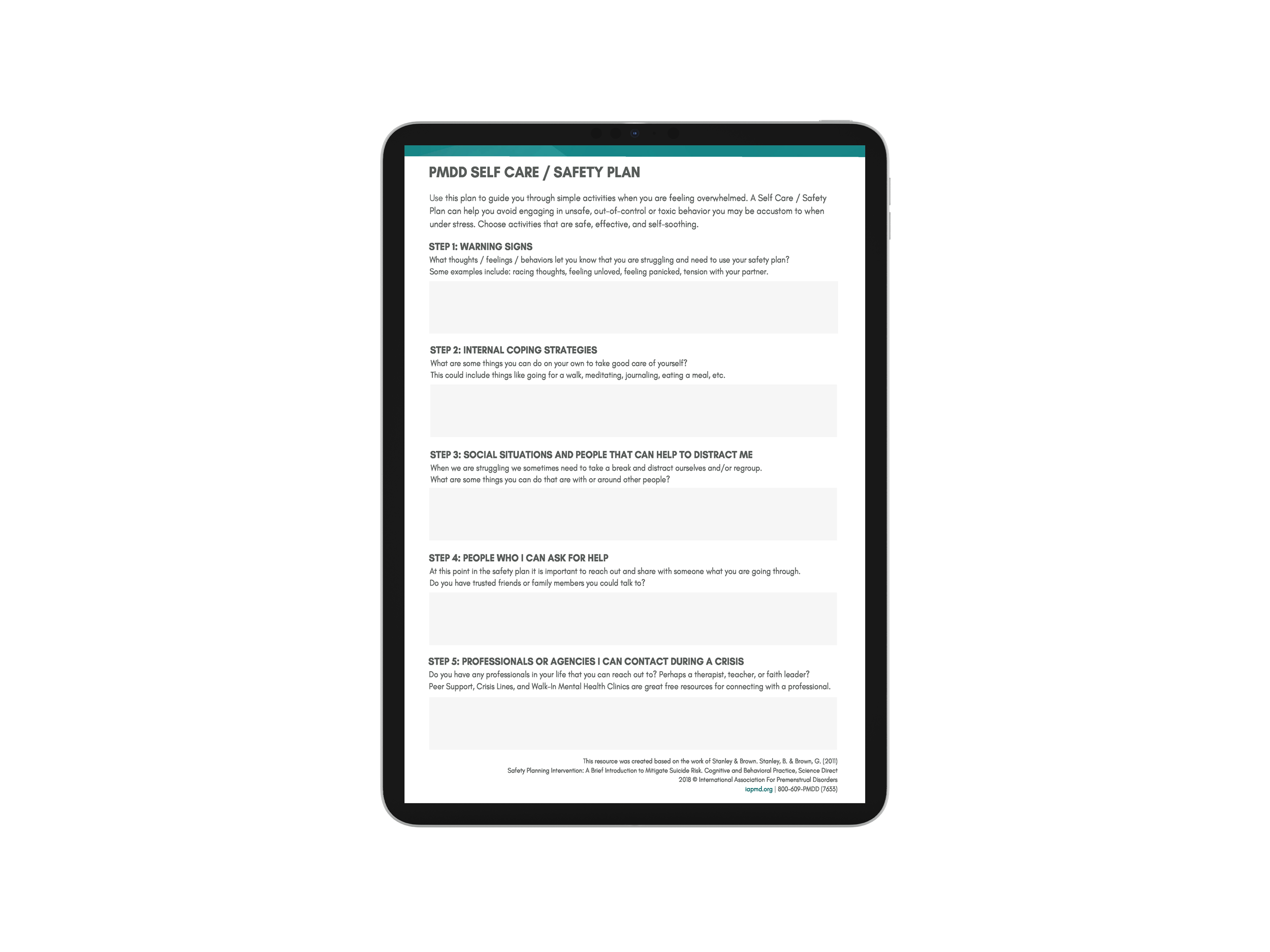
FREE IAPMD Safety Plan
$0.00
A safety plan is a personalized, written set of steps and resources designed to help someone recognize early warning signs of crisis, employ coping strategies, and access support when symptoms become overwhelming. It typically includes identification of triggers and warning signs, a list of internal coping skills, supportive people to contact, crisis resources and emergency contacts, and practical steps to maintain a safe environment. Safety planning encourages proactive care and connects individuals with trusted supports and professionals before a crisis escalates.
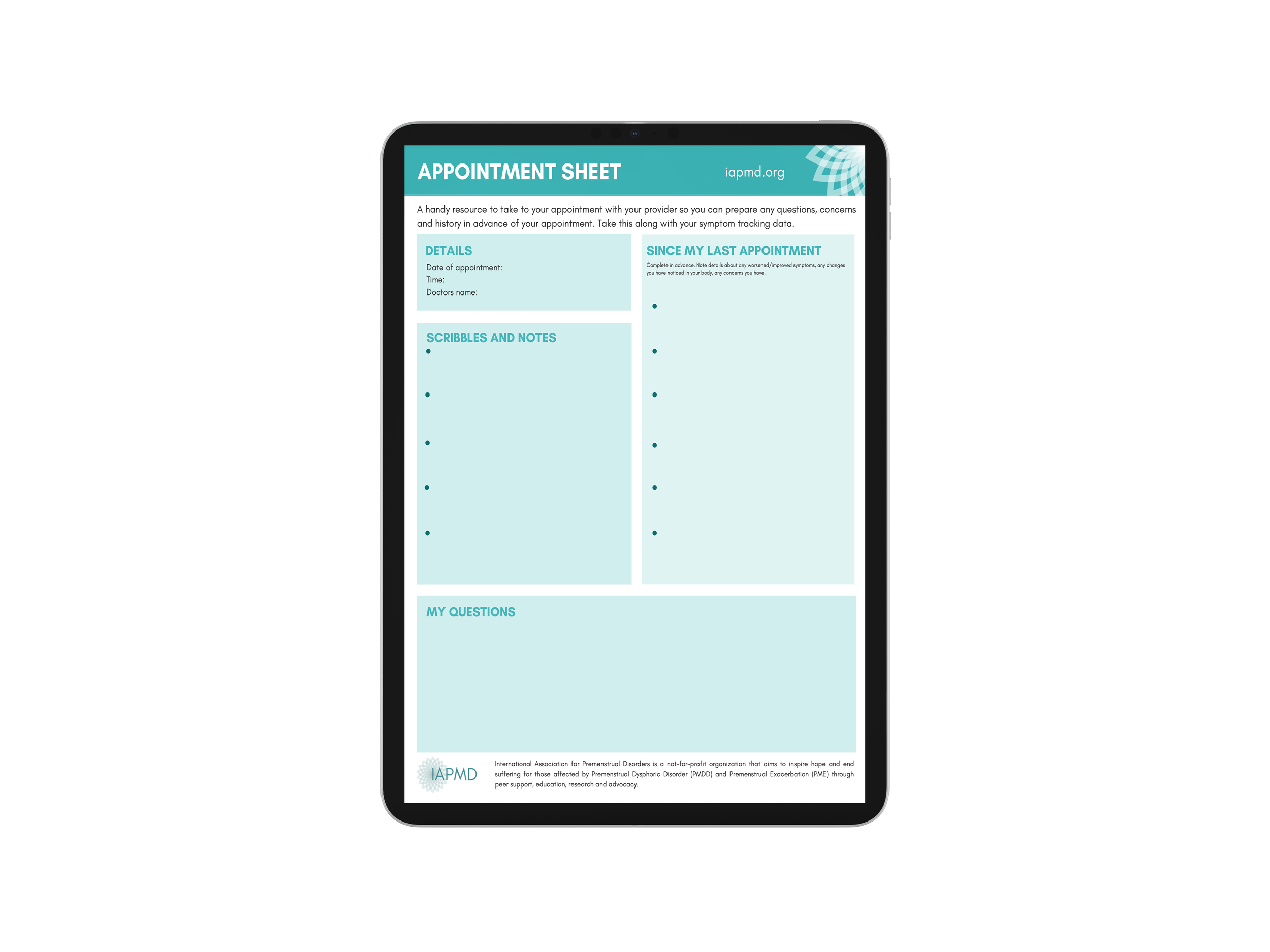
FREE IAPMD Ongoing Appointment Sheet
$0.00
Ongoing appointment tracking sheet for IAPMD to document provider visits, treatment changes, symptom patterns, and follow-up plans related to PMDD/PME care. Designed to support continuity of care and longitudinal treatment monitoring.
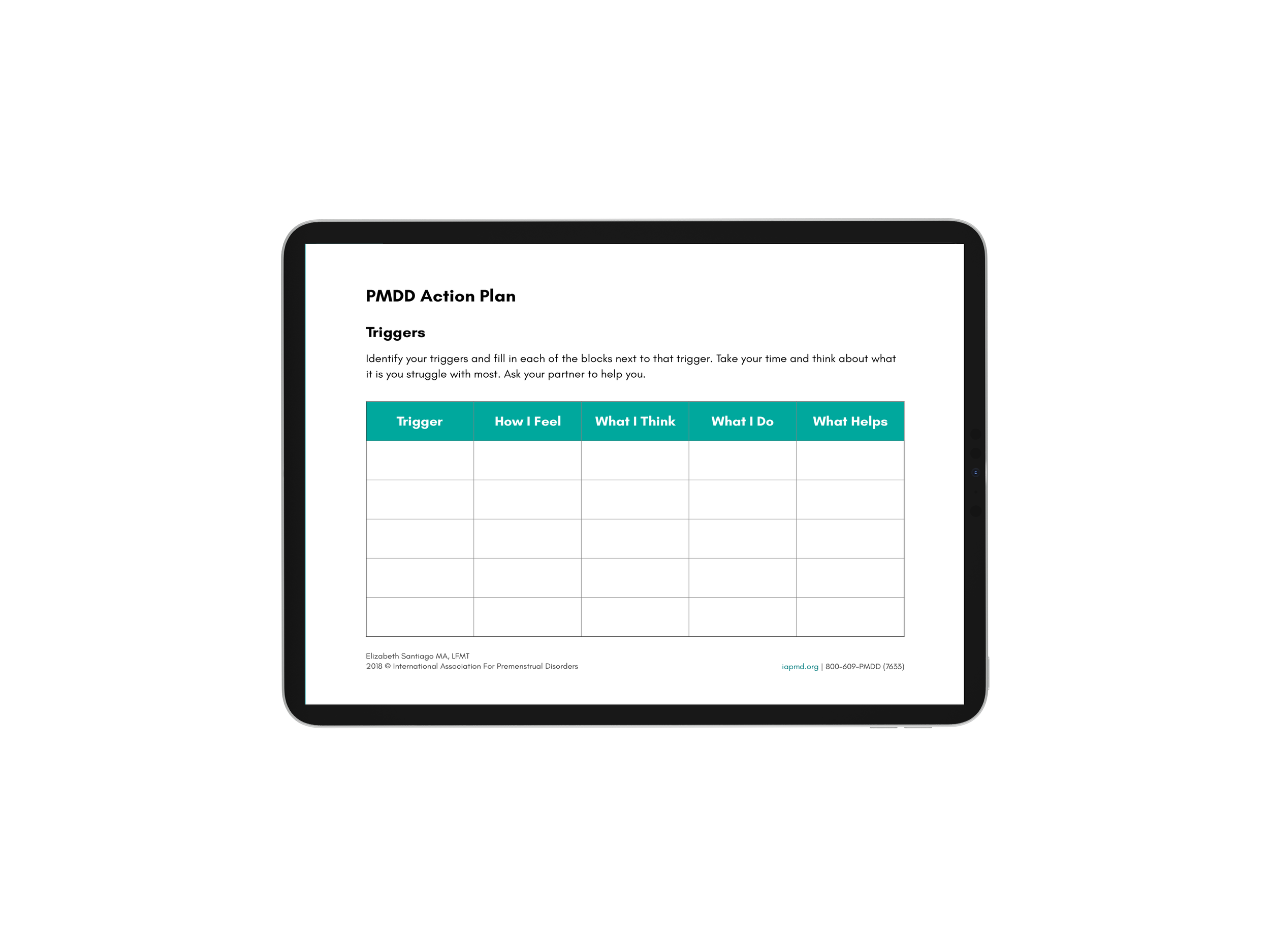
FREE IAPMD PMDD Action Plan
$0.00
The IAPMD PMDD Action Plan is a practical, personalized tool designed to help individuals manage Premenstrual Dysphoric Disorder (PMDD) more safely and effectively. Developed by the International Association for Premenstrual Disorders, this resource guides users in identifying their unique symptom patterns, early warning signs, coping strategies, treatment supports, and crisis planning steps.
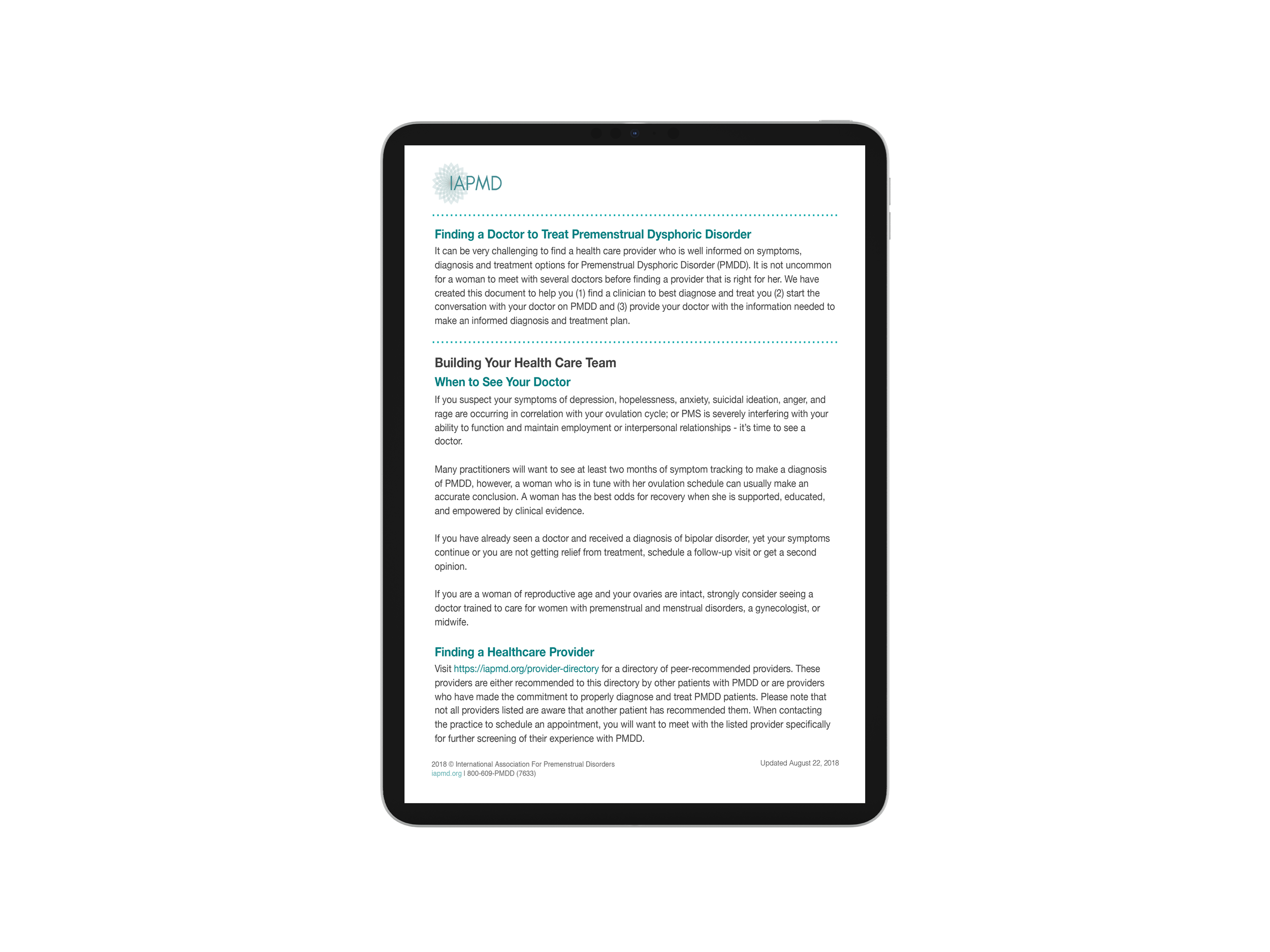
FREE IAPMD Clinical Care Sheet
$0.00
Download this complimentary Clinical Care Sheet from the International Association for Premenstrual Disorders (IAPMD) to support evidence-based assessment and management of premenstrual disorders, including PMDD. Designed for healthcare professionals, this practical resource summarizes diagnostic criteria, screening tools, treatment options, and patient support strategies—helping you provide informed, compassionate, and effective care.