Ovarian Hormones and Mood
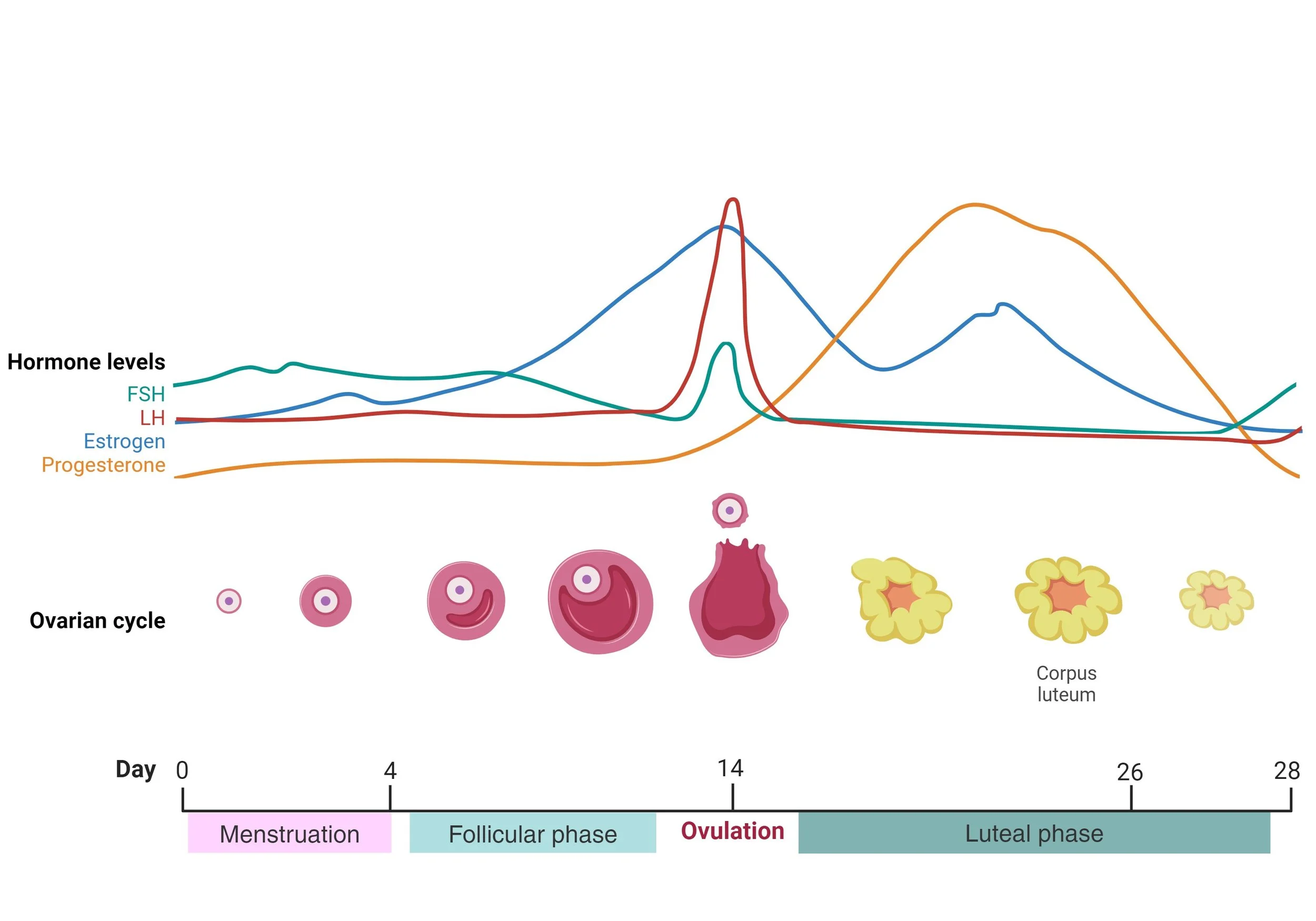
The start of your period, indicated by bright red bleeding, is considered the start of a new cycle. The length of the menstrual cycle can vary among people, ranging from 21 to 40 days. However, it remains fairly typical for an individual. For example, you may experience your cycle every 28-30 days, while someone else may have a cycle every 33-35 days.
Regardless of the cycle length, there are some critical events that occur within the menstrual cycle that are regulated by our hormones. These events mark specific phases of the menstrual cycle.
Follicular Phase
The first half of the cycle is marked by low levels of hormones and is called the follicular phase. During this phase, the follicle-stimulating hormone (aka FSH) released by the pituitary gland in our brain nudges follicles (or cells) in our ovaries to grow. As the follicle grows bigger and bigger, it produces higher and higher levels of estrogen.
Ovulation
Once the follicle grows in size, estrogen, FSH and leutinizing hormone (LH) levels peak, and an egg is released from the follicle. This is called ovulation and typically occurs within 24 hours of peak in LH level. This can be detected by a simple at home LH test or an ovulation testing kit. You might also notice bodily changes such as an increase in body temperature, increased libido and egg-white consistency of vaginal discharge.
Luteal Phase
The day after ovulation marks the luteal phase of the cycle and is usually 10-14 days long. During this time, the corpus luteum which is the remains of the follicle that released the egg, starts to produce progesterone. Progesterone levels peak approximately halfway through the luteal phase and begin to drop if the egg is not fertilized by a sperm. Estrogen levels drop right after ovulation and begin to rise again and have a second peak in the mid-luteal phase, after which they drop when there is no pregnancy. The drop in the hormones toward the end of the luteal phase triggers your period, which marks the start of a new cycle.