Ovarian Hormones and Mood
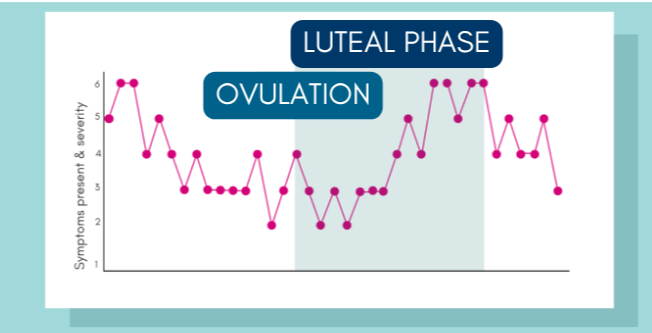
Image is for illustrative purposes only. Adapted from IAPMD’s PMDD Treatment Options ebook.
Premenstrual exacerbation, or PME, happens when people with existing mental health conditions notice their symptoms get worse in relation to hormonal fluctuations in their menstrual cycle. PME doesn’t cause new symptoms, it worsens existing symptoms.
Depression: About 60–66% of people with depression feel worse before their period. Most studies rely on memory, so more daily tracking is needed.
Bipolar Disorder: Around 64–68% of people with bipolar disorder have mood flare-ups during their cycle, based on daily symptom tracking studies.
Borderline Personality Disorder: Roughly 73% notice emotions are harder to manage before menstruation, based on daily tracking studies.
Anxiety & Panic Disorders: Many experience increased anxiety or panic before their period, though exact numbers vary, and daily tracking studies are limited.
Eating Disorders: Behaviors like bingeing, purging, and emotional distress often get worse before a period, according to daily tracking studies.
ADHD: About 40% notice focus and attention challenges get worse premenstrually, though this needs to be confirmed using daily tracking studies.
Autism: Up to 92% experience increased PMDD-like symptoms before their period, but more research using daily symptom tracking is needed.
Even though PME is common, it’s often missed because short clinic visits may not capture cyclical patterns. Experts recommend tracking symptoms for at least two menstrual cycles to identify PME and guide appropriate care. Research also shows that PME can significantly affect quality of life. People with PME report higher anxiety and depression than those with standard premenstrual symptoms and lower scores in nearly all areas of daily life.
Recognizing and understanding PME can help clinicians provide personalized mental health care. It can help us recognize when symptoms get worse and which conditions are affected. It allows for better-targeted treatment, improving daily life and mental health for people experiencing these challenges.
-
Lin, J., Nunez, C., Susser, L., & Gershengoren, L. (2024). Understanding premenstrual exacerbation: Navigating the intersection of the menstrual cycle and psychiatric illnesses. Frontiers in Psychiatry, 15, 1410813. https://doi.org/10.3389/fpsyt.2024.1410813
Kuehner, C., & Nayman, S. (2021). Premenstrual Exacerbations of Mood Disorders: Findings and Knowledge Gaps. Curr Psychiatry Rep. 23(11):78. doi: 10.1007/s11920-021-01286-0
Eisenlohr-Moul, T.A., Girdler, S.S., Schmalenberger, K.M., Dawson, D.N., Surana, P., Johnson, J.L., & Rubinow, D.R. (2017). Toward the Reliable Diagnosis of DSM-5 Premenstrual Dysphoric Disorder: The Carolina Premenstrual Assessment Scoring System (C-PASS). Am J Psychiatry. 174(1):51-59. doi: 10.1176/appi.ajp.2016.15121510
Nolan, L.N., & Hughes, L. (2022). Premenstrual exacerbation of mental health disorders: a systematic review of prospective studies. Arch Women’s Ment Health. 25(5):831-852. doi: 10.1007/s00737-022-01246-4
Additional Resources
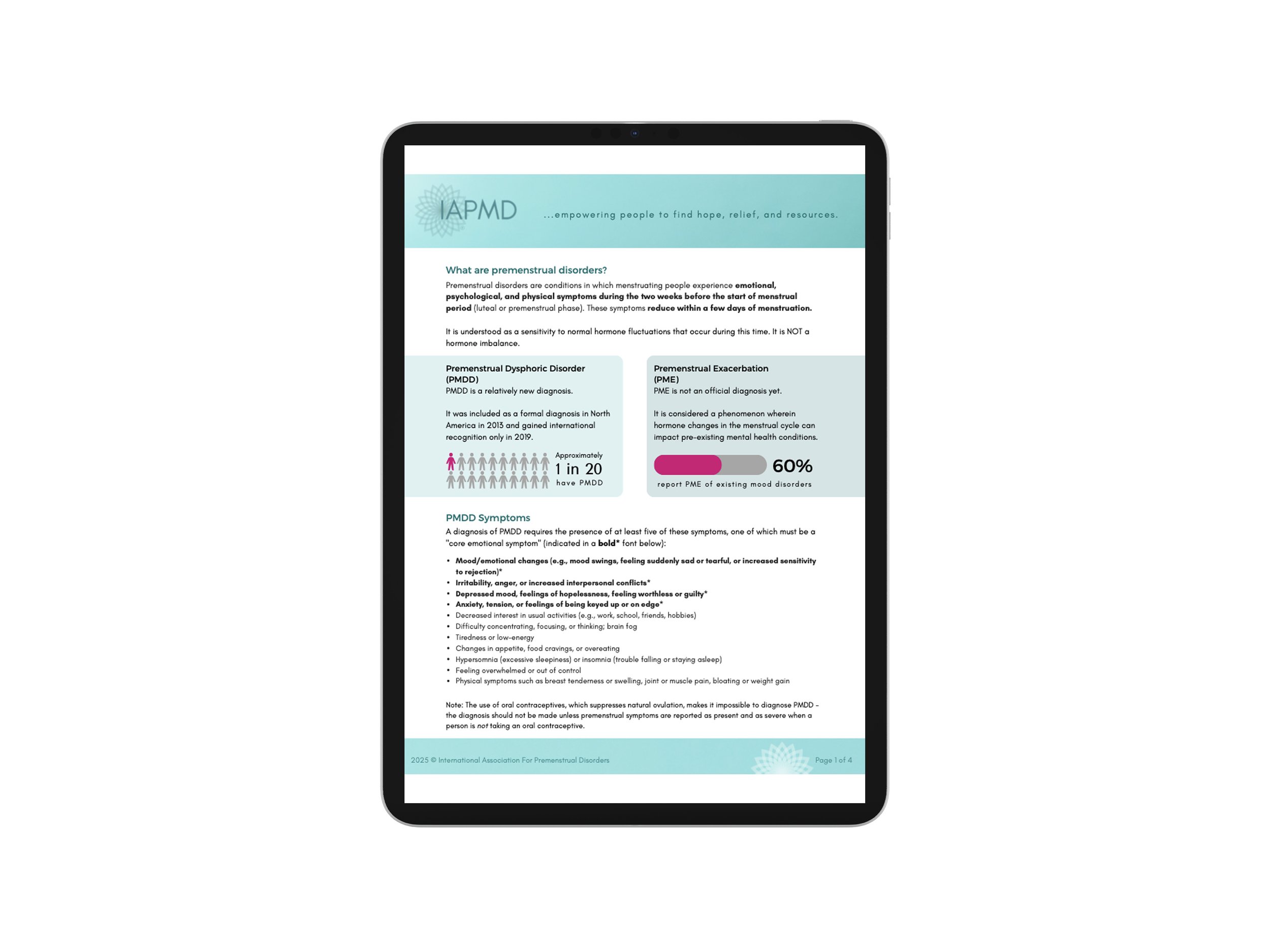
FREE IAPMD Premenstrual Disorders (PMDs) InfoKit
$0.00
The PMD InfoKit from IAPMD is a free, easy-to-follow guide designed to help you better understand premenstrual disorders (PMDs) like PMDD (Premenstrual Dysphoric Disorder) and PME (Premenstrual Exacerbation). Inside, you’ll learn:
What PMDs are and how they impact daily life
The key differences between PMDD and PME
Common symptoms of PMDD
How to track symptoms effectively—a crucial step for diagnosis and support
Whether you're just starting to explore symptoms or looking for ways to advocate for your health, the PMD InfoKit offers the clarity and support you need.