

Patient Profile 01: Amy Sergeant
Editor’s Note: this piece includes content on sexual assault and eating disorders
Amy logs on to the video call with thick headphones over her ears and skin that glows in the dim room’s orange lamplight. She is a woman who knows herself. That much becomes immediately clear. “As a child, I was very outgoing. I had two brothers, one older and one younger, but they would both follow me about a bit. I was very sporty. Loved singing and dancing. I was a very curious child who was reasonably good at a lot of things.
A girl of adventurous spirit, Amy Sergeant grew up in Hertfordshire, just outside of London, where the sun did shine but clouds often coated the sky and covered the moon. Of course, she always knew the moon was there, waxing and waning. But Amy needed to get out from under her clouded skies to really see.
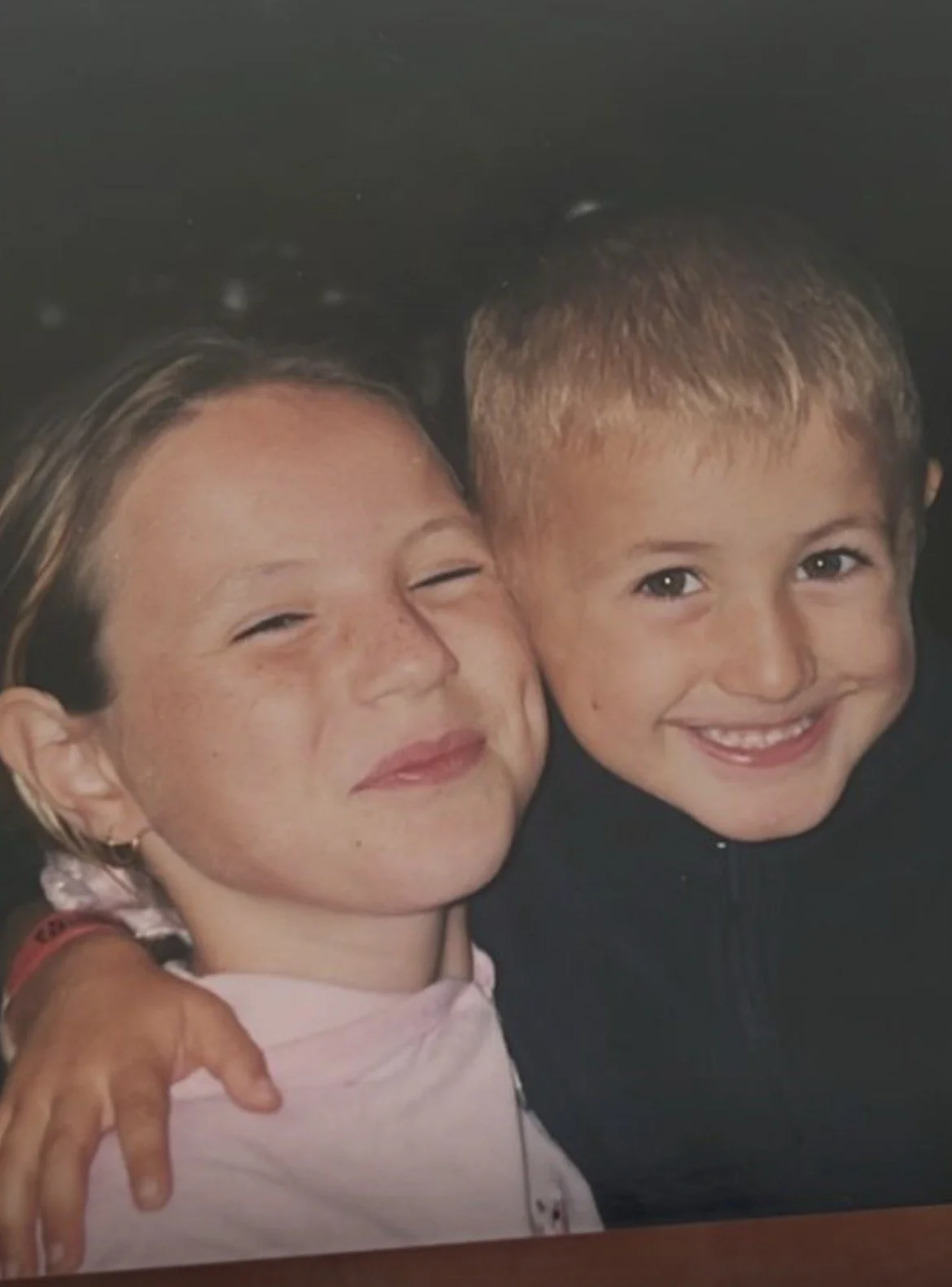
Amy (left) in childhood
Before her journey to the moon and back, though, there was much suffering.
Where I am (Colorado), it is seven-thirty in the morning. For Amy, it is nine-thirty at night.
“You’re in Thailand, right?”
“Malaysia,” she says. “I was in Thailand, but I’m training here now.”
Amy is a fighter. Literal and figurative. Her face shows no signs of punches or kicks, but there is something firm about her exterior. She is a dedicated practitioner of martial arts and meditation—practices integral to her healing.
Arriving at these practices, though, took trial, error, and time.
As a teenager, Amy was sexually abused. As a grown woman, from a bedroom in Malaysia, she tells me an all-too-familiar story: “No one believed me.”
So began a journey through bodily shame and dysmorphia. Trauma, flashbacks, rage. And with an utter lack of understanding from the people around her and of her own body, Amy turned to bulimia and to drugs.
The audio goes fuzzy. “Sorry, I missed that. What drug did you say?” I ask.
Amy’s skin looks taut with her hair slicked back. “Lots of different drugs. Cocaine, marijuana, ecstasy.”
When menstruation arrived, there was no comprehending how these behaviors and her cycle intertwined. How could she have known? Her psychiatrist diagnosed her with borderline personality disorder (BPD)—a common misdiagnosis for women with premenstrual dysphoric disorder (PMDD).
“I read this book that ended up being a huge part of my healing,” she tells me. “I realized a lot of women who are sexually abused get diagnosed with BPD because no one wants to deal with the trauma.” The book was Sexy but Psycho by Jesse Taylor.
Even back then—young, lost, hurting, and coping with substances—Amy knew herself deeply enough to recognize the dissonance between her BPD diagnosis and her experience.
“I didn’t agree with it,” she says, and the resolution in her voice is one of a woman who has been questioned and learned to believe herself. “I knew the world I was living in was messed up, and no one was listening.”
It was a magazine sent from her mother that changed everything. A magazine with an article on PMDD. “I remember thinking, ‘This seems more accurate to me.’ And as soon as I found it, I started tracking.”
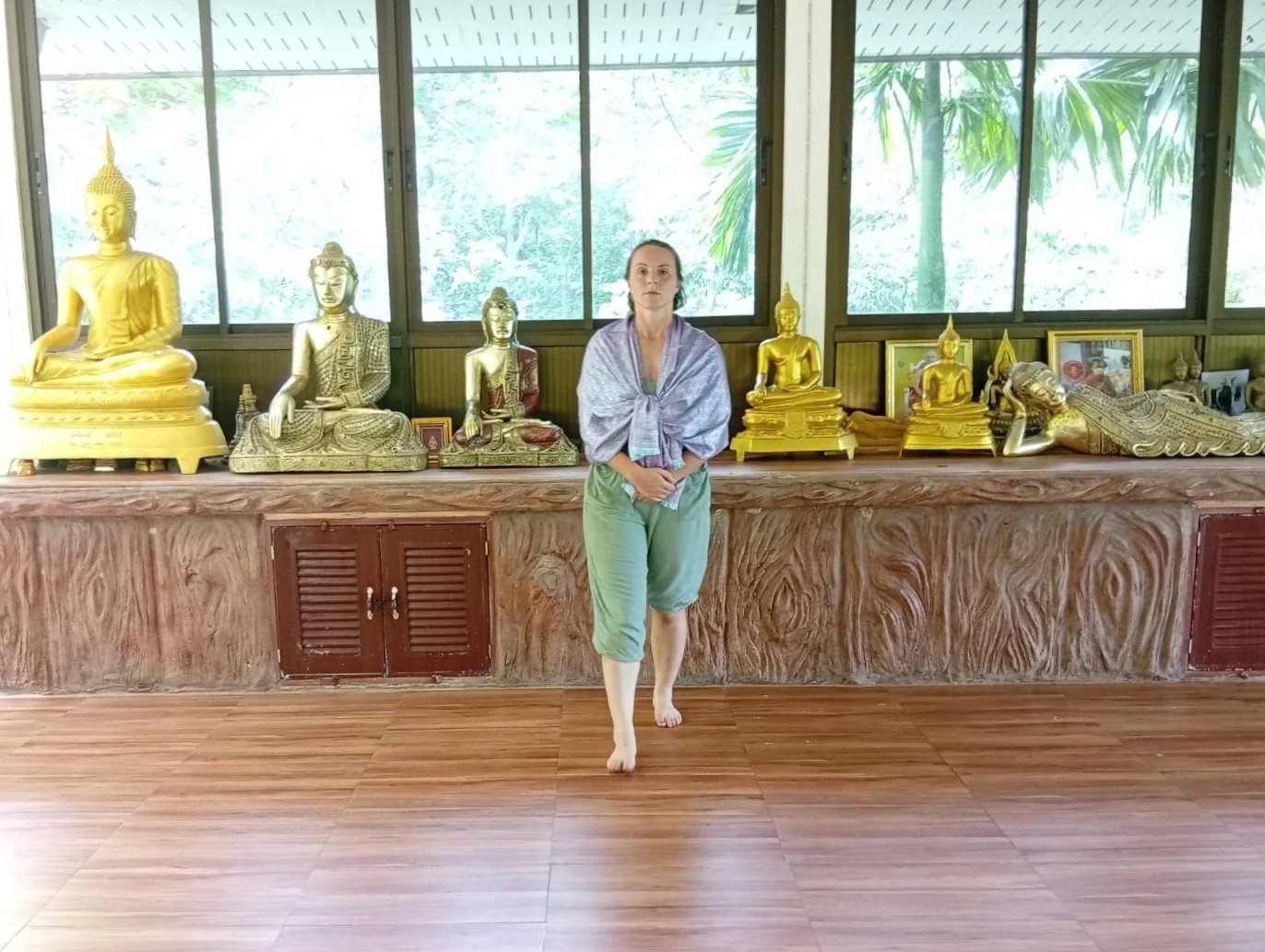
First came understanding the basics of the phases: menstruation, follicular, ovulation, luteal, and on and on again. The cyclical nature of her suffering became apparent as she paid attention. For Amy, tracking looked like knowing where she was in her cycle and, at menstruation, looking back at luteal and seeing “what was coming up?”
Only in hindsight did the transformative experience of her first bleed become clear.
Amy’s energy pierces through the screen from the opposite side of the planet, across time zones and ozone, as she tells me: “When I first started my cycle, I also started having visions.”
For her, these visions have become commonplace. She does not elaborate by nature, but I ask her to.
“I remember that first vision very well: I laid in bed, and I could see these two different colors. I saw myself as tiny, then really big, tiny, then really big. And I heard all these voices—all this muffling around of things telling me what to do and who to be. At the time, I didn’t think much of it.”
It took a year of tracking for Amy to piece things together, but she found one recurring theme across her monthly reflections: a loss of self-efficacy. An inability to trust herself to show up. An over-reliance on society’s expectations for her.
“I needed to gain trust in myself again, in my capacity to be consistent,” she says. For Amy, it began with ten-minute HIIT exercises every morning. “It was starting to build the habits back inside of me that I’d lost because of the highs and lows.
Morning by morning, by sweat and labored breaths, the trust developed.
In 2003, Amy went to Guatemala on a search for meaning. There, she delved into the world of tantric yoga—a form of yoga dedicated to connecting with one’s inner world through body and breath. It proved meditative and connective.
Amy had more visions, one of an archer in the mountains, calling to her. Of women, many women, and their pain. “It was very much like a movie. I would feel it so deeply, like it was my life. It was an in-your-bones kind of feeling.” And there, under the Guatemalan sky, carrying calls and suffering that had no concrete explanation but made all the sense in the world, Amy found her womanly wildness.
She noticed a correlation between her cycle and the moon. Menstruating at the full moon, visions came through intensely. A blessing and a curse. “When you are someone who has a very active inner world, the visions can be trauma-based as well and dissociative. It can be hard to differentiate the two, but they’ve been a profound part of how I’ve learned to understand myself.”
With time, she has learned to differentiate. The trauma-based visions hold great pain, she tells me. They’re stronger, louder. Whereas the visions untethered from trauma are grounded, easier to release. They are intuitions. Through tantric yoga and meditation, Amy learned to become a witness to herself. It’s how she knew that she was “meant to go to the Himalayas and start to unravel these things.”
First, though, it was Nicaragua. Then learning to fight in the deserts of Mexico. Then northern India, where she lived beside the Ganges for five months.
At the edge of sacred, rushing water, Amy faced a truth she had not expected to unveil. “There’s no intrinsic meaning as to why I got PMDD over anyone else.”
Whether it is the late hour of a long day or the weight of delivering such a pregnant truth, Amy’s voice is long and low. “I spent years traveling the world to try to find the meaning, and to find out it doesn’t exist is painful.” She releases a breath. “But it’s where the chains broke free.”
Amy’s chains shattered years ago, but the echo of that shattering remains. It can be heard in the way her voice moves into effervescence—into life—as she tells me, “I do have PMDD, and I do have to live with it. And it’s horrible!” She huffs a short, infectious laugh. “It’s shit! But how do I start to care for myself in that? That’s my responsibility.”
Amy equates it to Pandora’s box. “In the void becomes the hope,” she says, and the statement arrests me.
PMDD and premenstrual exacerbation (PME) pull all the horrible things out. The shame, hurt, doubt, grief. But something remains in the dark crevices of our inner worlds, and it is that hope.
“That’s the bit that, for me, becomes the most vital part,” Amy says, “to bring hope back into people’s lives in a real way.” She emphasizes that it isn’t about fixing. “The point is resilience, navigation, and community.”
And Amy has had to lean on this ideology in Malaysia. It has been a difficult season of life, wrought with internal challenges: an adventurous spirit’s desire to settle down, a fighter’s battle to allow herself to be held, the recurring exhaustion of luteal, and the demands of a society that doesn’t move like the moon but much more like the sun—every day, the same expectations, even for those who wax and wane.
This is life for Amy, and anyone with PMDD or PME: there are limitations. But Amy firmly believes that they don’t inherently need to be limiting. I ask her to explain.
Her philosophy: the work lies in honoring the realities of a cyclical body.
“The point of looking at a weakness is so you can look at the strength. You carve it into your life,” she says, raking a finger in the air, “the weaknesses and the strengths. That’s the biggest challenge I see in this community; we don’t want to carve it in, we want to eradicate it.”
There is loss inherent with PMDD. Loss of confidence, innocence. Amy’s voice goes soft, wistful, like someone gazing at a painting of a utopian world that can never be here but exists there, inside the frame, behind glass. “You lose the expectation of how life could have been.”
Inside of the pause, there is the sound of my fingers flying across the keyboard, and the hum of quiet. Then: “Going into that void is like a womb space in itself. When you move through it, it creates space for something new . . . hope that things can be better. It’s a surrender.”
Again, a hum of quiet but for the clacking of keys.
“Everything is going to be okay,” she says, and it’s clear that she believes it.
This is what Amy brings to the women and menstruators that she works with. For her, it is “a beautiful gift” to be able to help others navigate their inner worlds, to help them find such deep connection to their cycles that they begin to know it inside and out. That’s why she built her business, The Feminine Rhythm.
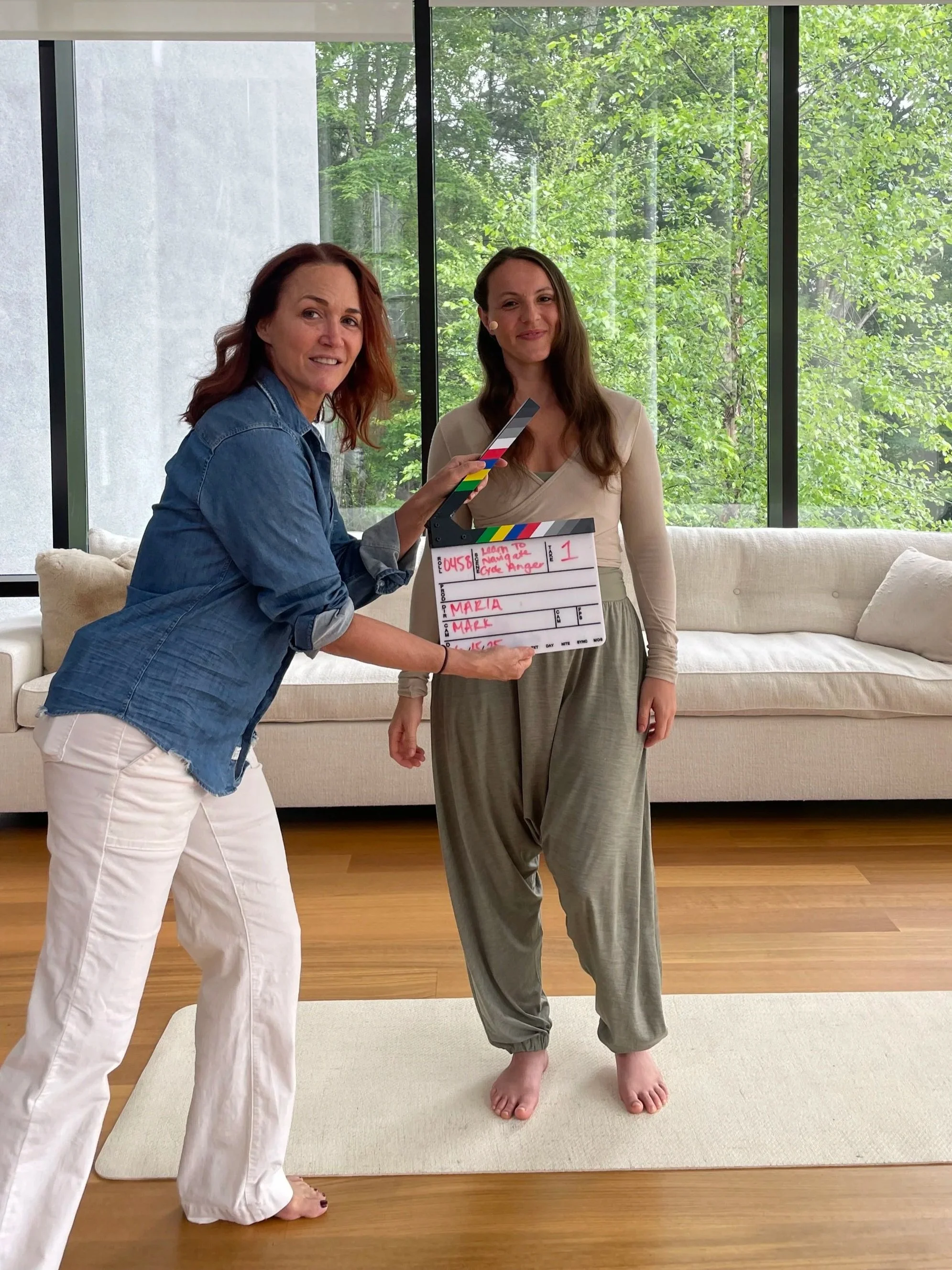
Amy tells me about the meditation course she’s developing specifically for the menstrual cycle—understanding hormones, the act of becoming a witness, the difference between intuition and intrusion. “It’s really about how meditation can support your cycle in a very practical way,” she says.
Amy is a woman who communes with the moon, dives into inner worlds, and fights in the deserts of Mexico and jungles of Asia. She is also a realistic woman who has found real progress, real healing, real hope.
She puts it frankly to me in the last few minutes of our call: “You can live around your cycle, and you need to accept that.”
And it is not perfect. Even twelve hours before our call, Amy stepped off her train after suffering an anxiety attack. She cancelled her plans, recognizing her limits and honoring them. In doing so, continuing to learn and listen to herself.
“There are always more tools to build,” Amy says.
Yes, and she is a living, breathing, fighting example of someone who continues to do just that and helps others do it, too. An adventurous spirit—of places inner and out. From London fog to Malaysian moons and back and back again.
