

Finding a Path Forward: PMDD and My Gender Journey
Editor’s Note: This article discusses suicidal ideation, self-harm, severe mental health symptoms, and experiences with PMDD. Reader discretion is advised. If these topics may be difficult for you, please consider whether this is the right time to read this article.
The treatment plan described in this article reflects the author’s personal experience and should not be interpreted as medical advice, a recommended treatment protocol, or an endorsement of any specific medication, supplement, or therapy. Medications and supplements, including Seroquel (quetiapine), Lexapro (escitalopram), Orilissa (elagolix), Claritin (loratadine), Pepcid (famotidine), vitamin B12, magnesium glycinate, DIM, Homocysteine Supreme, and THC, can have different effects, risks, contraindications, and potential interactions depending on the individual.
Readers should not start, stop, combine, or change the dosage of any medication or supplement based on this article. Anyone considering treatments for PMDD, gender dysphoria, menopause, or related symptoms should consult a qualified healthcare professional who can evaluate their individual medical history, medications, and circumstances.
The author’s experience with these treatments was highly personal and ultimately positive. However, individual experiences can vary significantly, and what was helpful for one person may not be appropriate or effective for another. References to specific treatments, including chemical menopause, testosterone therapy, and surgical intervention, are included to share the author’s experience, not to suggest that these approaches are appropriate for everyone.
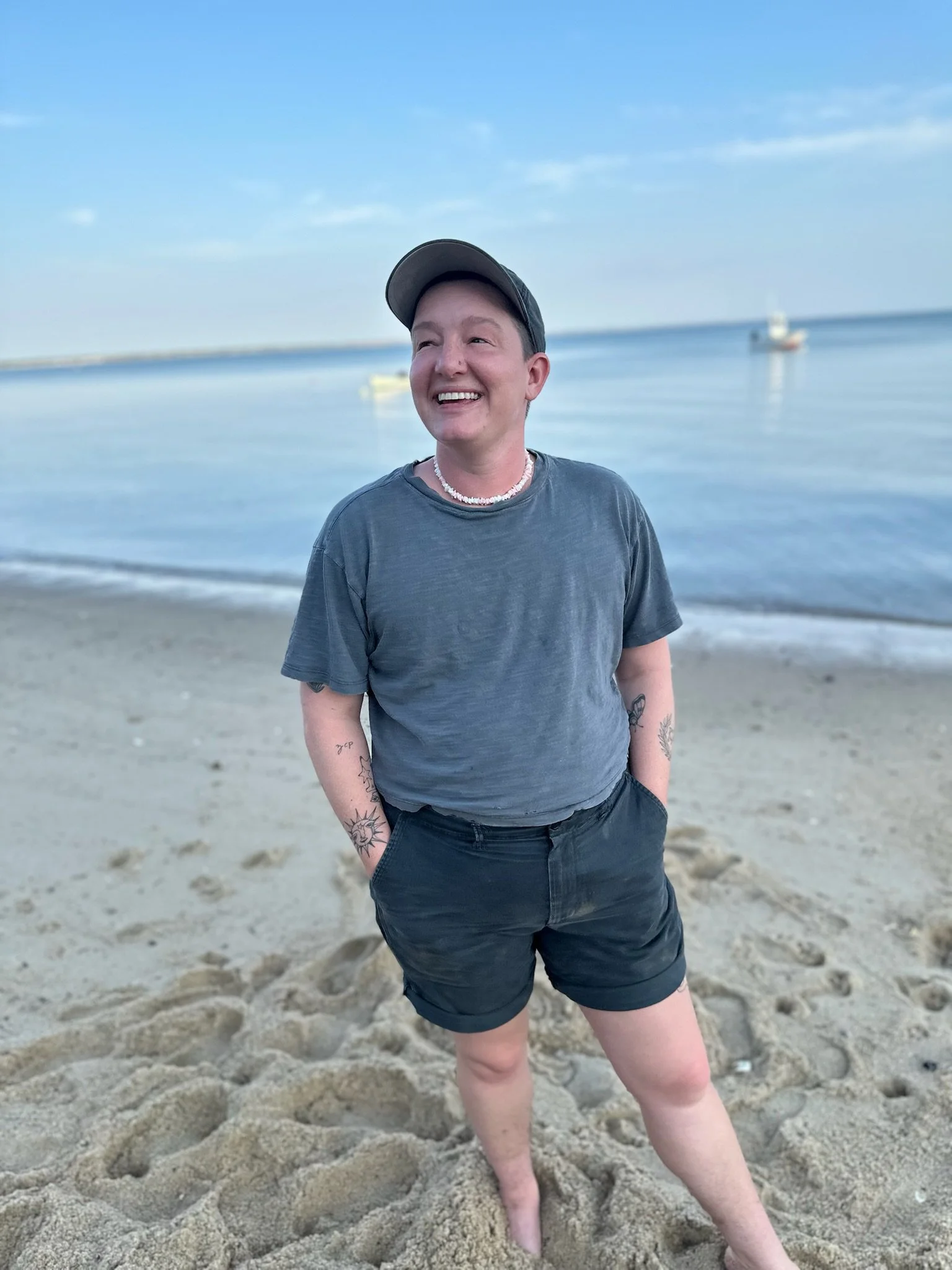
I’m a transgender survivor of Premenstrual Dysphoric Disorder (PMDD). As if inevitably linked, my PMDD symptoms and my gender journey actually ramped up around the same time. Balancing both kept me urgently seeking care and researching, while my job afforded me the salary, accommodations, and benefits I needed to pursue solutions while I was sick. In my wildest dreams, I never would have expected that transitioning and becoming symptom-free from PMDD would ultimately be part of the same pathway. Now, I want to get the word out about my treatment experience for other people who are looking for answers.
Some transgender people experience gender dysphoria alongside PMDD, and PMDD can make that dysphoria even more difficult to navigate. In addition to having life revolve around menstruation, physical symptoms such as bloating, breast tenderness, and cramps can serve as painful reminders of where one’s body feels misaligned. Psychological symptoms can make it more difficult to cope with this dysphoria, as well as navigate things like questioning one’s identity, finding community, medically and socially transitioning, and experiencing marginalization as a trans person.
The PMDD rollercoaster can also cause an incredible amount of self-doubt, identity disruption, and erosion of self-esteem, making the essential self-discovery and self-trust involved in being trans even more difficult than it already is in societies that push biological determinism and strict gender binaries.
Gender transition can look like many different things, and, for some people, it involves hormone replacement therapy. AFAB trans people with PMDD can face a particular challenge when starting testosterone because it can cause fluctuations in their hormones. People with PMDD have a sensitivity to hormonal fluctuations that can cause severe negative reactions, so starting testosterone can make PMDD symptoms worse and more unpredictable. Testimonials from transmasculine and nonbinary people indicate that testosterone may alleviate PMDD after a few months, but some people have experienced symptoms returning or coming and going over the course of months or even years.
When I took testosterone as part of my gender-affirming care for the first time, I had to stop after experiencing three consecutive weeks of extremely severe PMDD symptoms during my third month. It felt too dangerous to continue given how suicidal I became. My providers speculated that testosterone may have caused my ovaries to produce more estrogen and/or progesterone, and that spikes in those hormones likely contributed to the negative symptoms. After stopping testosterone therapy, it took an additional six months to get back to where I had been with managing my symptoms.
Before I continue with my treatment story, I need to emphasize how essential receiving high-quality, consistent therapy was to navigating this dual PMDD and gender journey, as well as all of the trial and error involved. For three years, I’ve had a trans therapist whose lived experience reassured me that they understood gender dysphoria and whose approach to care made it possible for me to openly discuss suicidal ideation and impulses to self-harm.
Together, we addressed what I could actually control and the ways I exacerbated my own suffering, including how I approached my job, relationships, and substance use. My therapist didn’t push specific treatments, advice, or dogmas and demonstrated careful awareness of my cycle. Compassionate confrontations were deployed outside of my luteal phase and served as critical opportunities for learning when I was stuck.
Most importantly, I felt that I had a teammate who radically believed that I could figure it all out and have an amazing life without invalidating my very real and persistent pain. Each month, I had a sounding board as I tried new things and logistically prepared for my luteal phase. Gradually, I realized that I needed to trust and advocate for myself while getting support from loved ones through these challenges.
After many more Groundhog Day-like months following my first experience with testosterone, I ultimately decided that both not transitioning and having a severe mood disorder created an unlivable situation for me. I collaborated with a handful of providers to treat PMDD as best as I could, with the goal of somehow getting back on testosterone.
In addition to my therapist, the team eventually included a psychiatrist, reproductive endocrinologist, functional nutritionist, acupuncturist, and OB-GYN, all with varying levels of information and theories about PMDD.
Managing this team was a lot of work. One provider would confidently tell me that my PMDD was caused by progesterone sensitivity, followed by someone else saying that I had an estrogen dominance and metabolism problem the very next day. Fewer people knew better than to make such declarations. However, I was able to navigate these conversations and implement relevant expertise from each person—who still had valuable knowledge to provide, despite their limitations with PMDD—because of my own research and my growing ability to advocate for myself.
Here’s the very effective treatment plan that we implemented before moving on to more radical interventions:
Seroquel 25 mg — half in the morning and half in the evening. I honestly wish I had started this medication sooner. At this low dose, it was an incredibly effective mood stabilizer, and I saw improvements in my overall well-being right away.
Lexapro 20 mg daily
B12 each morning
Magnesium glycinate each evening
DIM daily for estrogen metabolism support
Homocysteine Supreme daily for estrogen metabolism support
Claritin each evening
Pepcid as needed on difficult days during the luteal phase, but no longer than two weeks consistently
Microdosing THC on very difficult days; even 1–2 mg helped
Acupuncture twice a month during the luteal phase
Quitting alcohol
Improving my diet overall
Reducing caffeine
Regular exercise
As I stabilized my mental health, my providers and I created a plan for chemical menopause, taking testosterone indefinitely, and undergoing a full hysterectomy and oophorectomy. Here was the sequence of events:
First, just in case, I prepared for a prolonged mental health meltdown and created a three-month care plan. It outlined the major milestones coming up in my healthcare for both myself and my loved ones. With an accompanying calendar, I worked with friends to schedule shared meals, walks, and check-ins. I also created emergency response protocols and detailed my preferences for things like psychiatric hospitalization, care for my dog, and how friends would communicate with my parents.
Then, I started taking a full dose of Orilissa to induce chemical menopause, which involved taking a pill twice per day.
NOTE: Seeing the reproductive endocrinologist and doing my own research about chemical menopause were crucial. Other providers would have prescribed Lupron injections for chemical menopause, and it appeared that this could be incredibly dangerous for people with PMDD. Lupron causes hormonal surges before shutting down the ovaries, and some people have reported very distressing mental health outcomes as a result. Orilissa works right away without a hormonal surge, and because you take it as a pill, you can stop taking it immediately if you’re having a bad reaction.
I started taking testosterone gel daily at a starting dose of 25 mg at the same time as Orilissa. This prevented me from experiencing menopause and served as gender-affirming care.
Simultaneously, I began weekly acupuncture treatment until it appeared that I was in the clear from mental health symptoms.
Two months later, I had surgery to remove my uterus and ovaries, continuing on testosterone and increasing my dose as needed when menopausal symptoms occasionally occurred.
Finally, I continued to have blood work done and see a provider to ensure that my testosterone levels remained within the “normal male range.”
So, I braced for impact as I took what felt like this massive leap of faith. Prepared for the worst, I was completely shocked when I experienced the very best outcome. There wasn’t a mental health crisis. In fact, I have never felt better in my life.
This portion of the story is brief because I’m honestly still making sense of it and coming to terms with this new reality. I’m even writing this story as a way to process it all.
My days have been peaceful and abundant, and my body and mind are starting to feel safe. I’m still waking up from what feels like a bad dream, but what I do know is that I couldn’t be more grateful to have survived and to be on the other side.
Now, I want to do my part to make sure people with PMDD—particularly my trans siblings—have more information, more understanding, and more reasons to be hopeful.
Written by: Sea Carrier
Edited by: Mandy Shea
